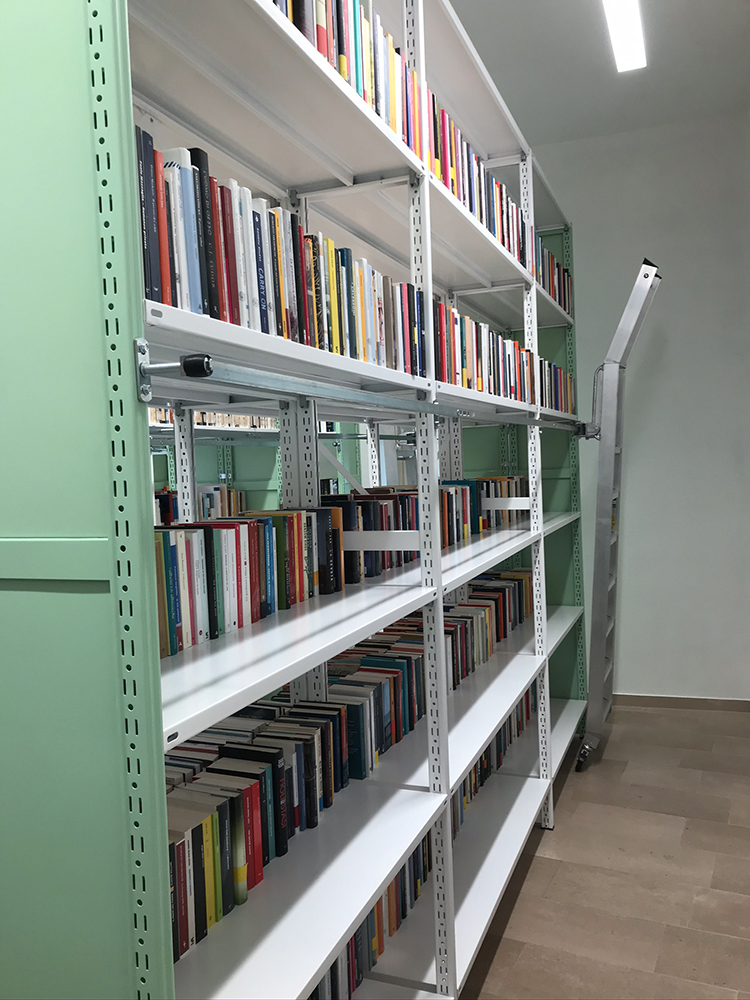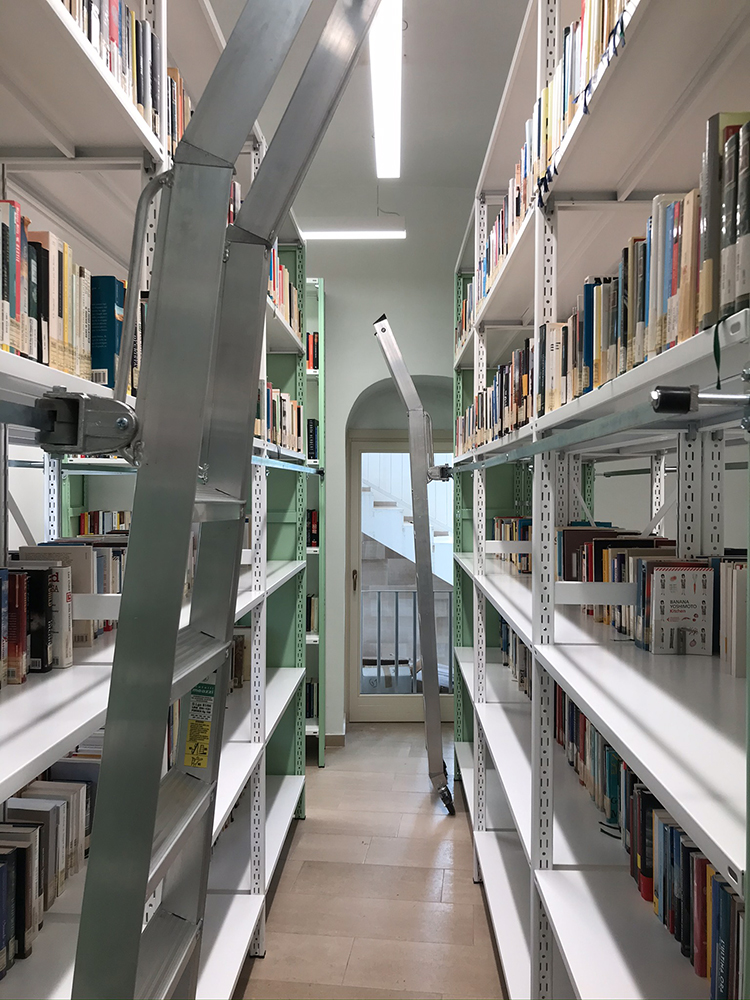
The “Giuseppe del Viscio” public library in Vico del Gargano was established as a municipal structure in 1970, with an initial book collection of about 500 volumes. Its growth over the years has been significant thanks to the donation by fellow citizen Francesco Delli Muti of a special collection of about 1,300 documents, which has been joined by the donations from banking and private institutions. The book collection amounts to about 25,000 catalogued books which include about 3,500 old books, about 11,000 modern books classified with the Dewey Decimal System and about 2,400 children’s books classified with the CELBIV system (Cooperativa Editrice Libraria tra le Biblioteche Venete), a symbolic classification which groups books by genres by distinguishing them with a coloured symbol.
The Library preserves the books and manuscripts of what has long been one of the most important ecclesiastical libraries in the Province of the Arcangelo and in the whole of Puglia: that of the Convent of the Capuchin Fathers. It was in this place that Father Michelangelo Manicone (Vico del Gargano, 4th March 1745 – Ischitella, 18th April 1810), the Italian naturalist and philosopher, author of “La Fisica Appula”, a work of five volumes, in which he analyses the physical properties of the lands of Puglia and above all of the Gargano, stayed and worked.